Hello, my name is Aurore, I am currently studying natural sciences at Montmorency College. Studying in this program for nearly 3 years now has made me aware of the complexity of certain subjects. Having to remember hundreds of terms can sometimes be a challenge. I made this glossary to help students like me, who sometimes have trouble remembering certain terms, to have access to a tool that could summarize some them.
acid
noun
A molecule or other entity that can donate a proton or accept an electron pair in reactions.
Example: Strong acids and some concentrated weak acids are corrosive.
fr: acide
adenosine triphosphate (ATP)
noun
Adenosine triphosphate is an organic compound and hydrotrope that provides energy to drive many processes in living cells, such as muscle contraction, nerve impulse propagation, condensate dissolution, and chemical synthesis
Example: In plants, ATP is synthesized in the thylakoid membrane of the chloroplast.
alcohol
noun
Any organic compound whose molecule contains one or more hydroxyl groups(OH) attached to a carbon atom.
Example: Alcohols may be considered as organic derivatives of water (H2O)
fr: alcool
aldehyde
noun
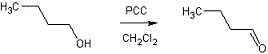
An organic compound containing the group —CHO, formed by the oxidation of alcohols.
Example: Aldehydes are common and play important roles in the technology and biological spheres.
fr: aldéhyde
alkane
noun
A compound that has a carbonyl functional group at the end of a chain of C atoms
Example: Alkanes with more than three carbon atoms can be arranged in various ways, forming structural isomers.
fr: alcane
alkene
noun
Any of the series of unsaturated hydrocarbons containing a double bond ( C-C )
Example: Alkenes are generally colorless apolar compounds, somewhat similar to alkanes but more reactive.
fr: alcène
alkyne
noun
An aliphatic hydrocarbon that contains a C–C triple bond
Example: Alkynes are acyclic (branched or unbranched) aliphatic hydrocarbons
fr: alcyne
antibiotic
noun
Compounds that kill or inhibit the growth of bacteria and are used to treat bacterial infections.
Example: Penicillin (produced by the penicillium fungus), is a good example of a well-known antibiotic.
fr: antibiotique
avogadro's constant
noun
The number of atoms or molecules in one mole of a substance, equal to 6.023 × 10²³.
Example: To convert from moles to atoms, multiply the molar amount by Avogadro’s number.
fr: constante d'Avogadro
base
noun
A base is a chemical species that donates electrons, accepts protons, or releases hydroxide (OH-) ions in aqueous solution.
Example: Examples of bases include alkali metal hydroxides, alkaline earth metal hydroxides, and soap.
fr: base
chromosome
noun
A single long DNA molecule, typically organized in a compact, elongated structure, to segregate the genetic material during mitosis and meiosis.
Example: Humans have 23 pairs of homologous pairs of chromosomes (46 total).
fr: chromosome
deoxyribonucleic acid (DNA)
noun
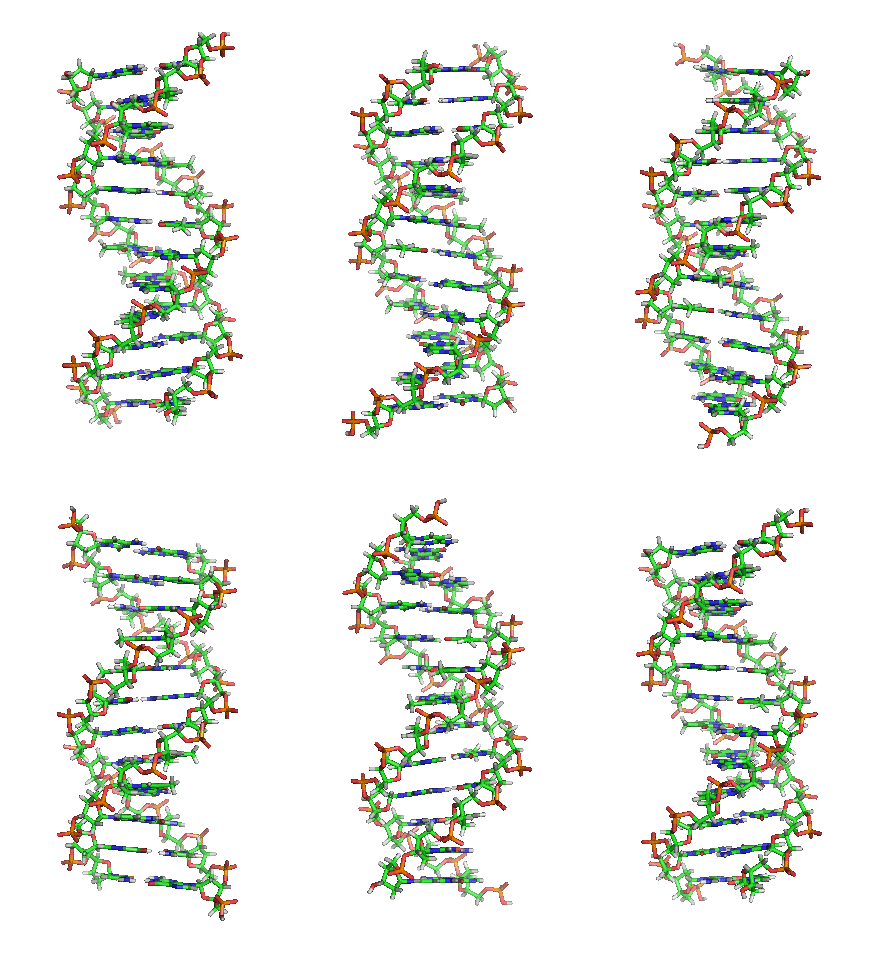
A chain of linked nucleotides composed of four different bases. DNA forms a double helix composed of two anti-parallel chains with the bases interacting in the center like a zipper. The sequence of the bases creates a triplet code that specifies instructions for making proteins in cells.
Example: People who are closely related have more similar DNA.
fr: acide désoxyribonucléique (ADN)
diffraction
noun
The process by which a beam of light or other system of waves is spread out as a result of passing through a narrow aperture or across an edge.
Example: Diffraction occurs with water waves which bend around a fixed object.
fr: diffraction
electron
noun
A stable subatomic particle with a charge of negative electricity, found in all atoms and acting as the primary carrier of electricity in solids.
Example: The hydrogen atom, for example, has just one electron and one proton.
fr: électron
enzyme
noun
Enzymes (mostly proteins and occasionally RNAs) are “catalysts” that increase the rate of chemical reactions.
fr: enzyme
gamete
noun
A gamete is a haploid cell used for sexual reproduction.
Example: The fusion of a male gamete (sperm) and a female gamete (egg) during fertilization leads to the development of a diploid organism.
fr: gamète
mole
noun
A standard scientific unit for measuring large quantities of very small entities such as atoms, molecules, or other specified particles.
Example: A mole of aluminum is about 26 grams
fr: mole
neutron
noun
A subatomic particle with no charge
Example: All carbon atoms have six protons and most also have six neutrons.
fr: neutron
nucleotide bases
noun
The chemical moieties that encode information in DNA and RNA. Adenine and guanine are called “purines,” and cytosine, thymine, and uracil are “pyrimidines,” . A base is connected to a pentose sugar and phosphates to create nucleotides.
Example: The bases used in DNA are adenine (A), cytosine (C), guanine (G), and thymine (T).
fr: bases nucléiques
Photosynthesis
noun
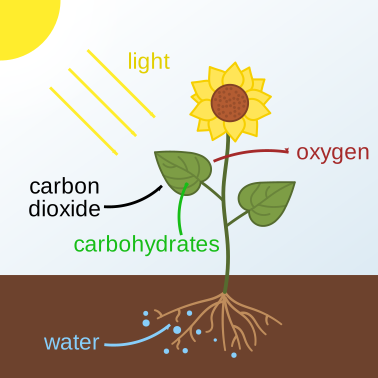
The process by which plants convert sunlight into energy.
Example: If photosynthesis ceased, there would soon be little food or other organic matter on Earth.
fr: Photosynthèse
proton
noun
A stable subatomic particle with a positive electric charge equal in magnitude to that of an electron, but of opposite sign.
Example: One or more protons are present in the nucleus of every atom